April 17, 2026
Heavy traffic areas, including commercial parking lots, industrial yards, loading zones, and high-volume driveways, demand durable paving that withstands constant vehicle loads, frequent turning movements, and the mechanical stresses that light-duty surfaces cannot tolerate without rapid deterioration. Property owners and facility managers face critical decisions about paving materials that significantly affect upfront costs, long-term maintenance expenses, performance under heavy loads, and total lifecycle economics that make proper material selection essential for protecting substantial paving investments. Understanding how different paving materials perform under demanding conditions helps you make informed decisions that balance initial construction costs against durability, maintenance requirements, and the total cost of ownership throughout decades of heavy use. The difference between pavements that provide reliable service for many years and those requiring frequent repairs or premature replacement often comes down to whether material selection properly matched anticipated traffic conditions and loading patterns. Learning what distinguishes various paving options and how they perform under heavy traffic empowers you to choose materials that serve your specific needs while optimizing the balance between construction costs and long-term value that proper material selection delivers for commercial and industrial paving applications.
Initial Installation Costs and Construction Timeline
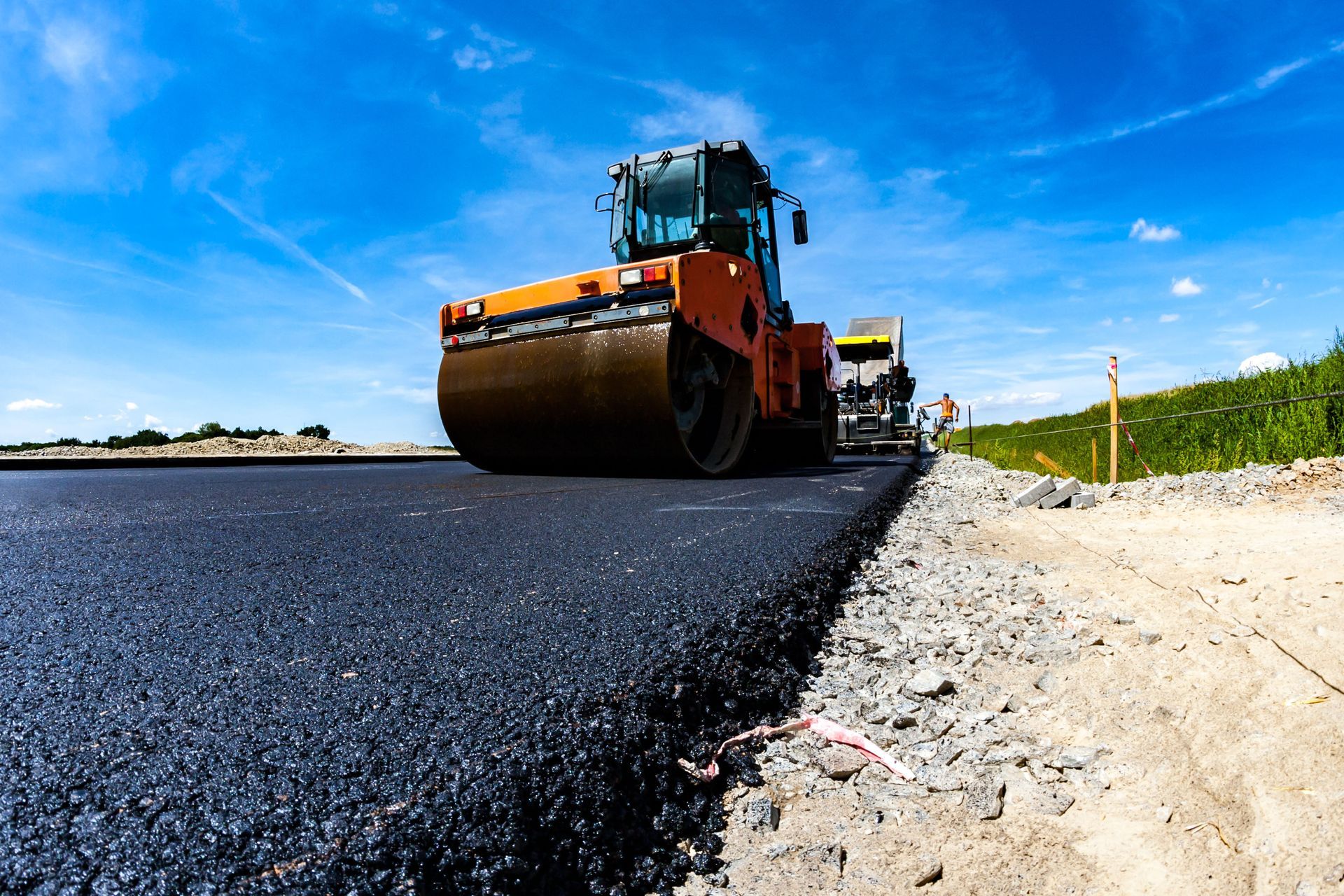
According to Forbes, asphalt paving can last between 15 and 30 years on average. Installation expenses for asphalt typically run lower than concrete due to simpler construction processes, readily available materials, and faster installation that reduces labor costs and project duration, affecting business operations. This cost advantage proves particularly significant for large parking areas or extensive paving projects where material price differences multiply across thousands of square feet, affecting total project budgets. The quicker installation and faster curing that asphalt provides allow earlier facility use compared to concrete, requiring extended curing before accepting traffic loads. Professional paving contractors complete projects more rapidly than concrete installations, minimizing business disruption and allowing faster return to normal operations, which proves valuable for commercial facilities where extended construction timelines create revenue losses or operational difficulties that rapid asphalt installation mitigates through its faster construction schedule and immediate usability following compaction.
Load-Bearing Capacity and Structural Performance
Concrete's rigid structure distributes heavy loads across broader areas, making it theoretically superior for extreme weights, including loaded semi-trucks, heavy equipment, and concentrated loads that flexible pavements may not support as effectively. However, properly designed asphalt with adequate base preparation handles heavy traffic loads successfully when thickness and base specifications match anticipated loading conditions. The flexibility that asphalt provides allows some deflection under loads without cracking, while concrete's rigidity makes it susceptible to cracking from concentrated stresses or settlement. Quality asphalt designed for heavy traffic includes sufficient thickness and proper base construction that provides the structural capacity heavy vehicles require, while the material's flexibility prevents the crack propagation that rigid concrete experiences when foundations settle or when thermal stresses exceed the material's tensile strength, causing the joints and cracks that concrete inevitably develops.
Maintenance Requirements and Repair Complexity
Asphalt requires periodic sealcoating every few years to maintain surface integrity and appearance, creating ongoing maintenance expenses that concrete doesn't need for surface protection. However, asphalt repairs prove simpler and less expensive than concrete work when damage occurs, as patching blends seamlessly, and equipment for asphalt work remains more readily available. The crack filling and patching that asphalt occasionally needs proves straightforward compared to concrete repair, requiring saw cutting, removal, and replacement of entire sections for proper repairs. Strategic asphalt paving maintenance through regular sealcoating and prompt crack repair extends pavement life substantially while maintaining appearance and preventing the progressive deterioration that deferred maintenance allows, making the ongoing attention that asphalt requires less burdensome than it initially appears when considering that proactive maintenance proves far less expensive than the major repairs that neglect necessitates for either material.
Climate and Weather Performance
Freeze-thaw cycles affect both materials differently, with concrete's rigidity making it prone to cracking from ice expansion in cracks and joints, while asphalt's flexibility allows some movement without catastrophic failure. Heat softening affects asphalt in extreme temperatures, potentially causing rutting under heavy loads, though proper mix design mitigates this concern in most climates. The deicing chemicals used in winter climates damage concrete surfaces while having minimal impact on asphalt, which resists salt deterioration better than concrete, showing surface scaling from chemical exposure. Modern asphalt formulations account for local climate conditions through mix designs that resist both high-temperature deformation and low-temperature cracking, providing performance across temperature ranges that facilities experience throughout annual cycles while avoiding the thermal stress cracking that concrete's coefficient of expansion creates during temperature fluctuations, affecting rigid pavements differently than flexible asphalt surfaces.
Longevity and Lifecycle Expectations
Concrete's potential 30-50 year lifespan exceeds asphalt's typical 15-30 year performance, though actual longevity for both materials depends heavily on traffic volumes, maintenance quality, and construction standards affecting real-world durability. This longevity difference narrows substantially when comparing well-maintained asphalt to neglected concrete, as maintenance quality affects performance more than inherent material characteristics. The total lifecycle cost analysis should consider not just initial longevity but also maintenance expenses and eventual replacement costs affecting total ownership expenses. Well-executed asphalt paving with proper thickness, quality materials, and regular maintenance provides decades of reliable service approaching concrete's lifespan at a lower total cost when considering that asphalt's lower initial expense allows budget for the periodic maintenance that extends service life, while total expenditures over pavement lifetime often favor asphalt despite its shorter theoretical maximum lifespan compared to concrete under ideal conditions.
Sustainability and Environmental Considerations
Asphalt's complete recyclability makes it among the most recycled materials globally, with old pavement incorporated into new installations, reducing virgin material consumption and landfill waste. This recyclability proves both economically and environmentally beneficial as reclaimed asphalt maintains performance while reducing costs and resource consumption. The petroleum content in asphalt creates environmental concerns, though modern warm-mix technologies reduce production temperatures, lowering energy consumption and emissions. Environmentally conscious asphalt paving increasingly incorporates recycled materials and employs production methods that reduce environmental impact while maintaining the performance that heavy traffic demands, addressing sustainability concerns through the industry's evolution toward practices that maintain asphalt's practical advantages while reducing the environmental footprint that material production and installation create throughout the paving lifecycle from production through installation and eventual recycling.
Flexibility for Future Modifications
Utility work, additions, or modifications prove simpler in asphalt as cutting, patching, and blending repairs into existing pavement maintains a relatively uniform appearance compared to concrete patches that remain visibly different. This modification flexibility matters for facilities anticipating future changes, including utility installations, building additions, or traffic pattern modifications requiring pavement adjustments. The ease of matching existing asphalt during repair or modification work maintains aesthetic consistency that concrete cannot achieve when patches or additions create permanent visual discontinuities. Adaptable asphalt paving accommodates the changes that active commercial and industrial facilities inevitably require throughout their operational lives, allowing pavement adjustments without the permanent scarring that concrete modifications create through patches and saw cuts that remain visible indefinitely despite best repair efforts, making asphalt's adaptability valuable for facilities where future modifications prove likely during extended facility operating lives.
Understanding these performance and cost factors helps property owners and facility managers make informed paving decisions that suit their specific traffic conditions, budget constraints, and long-term facility plans. Both materials offer advantages in particular situations, though asphalt's combination of lower cost, faster installation, easier repairs, and proven heavy-traffic performance makes it the preferred choice for most commercial applications. Evaluating your specific needs against material characteristics ensures optimal paving selection that balances initial investment against long-term performance and total lifecycle costs. Whether you need a paving contractor, asphalt paving, or parking lot striping, Crossroads LLC Asphalt Paving provides free estimates and brings 25 years of industry experience. For more information, contact us today!